What is a good FWHR?
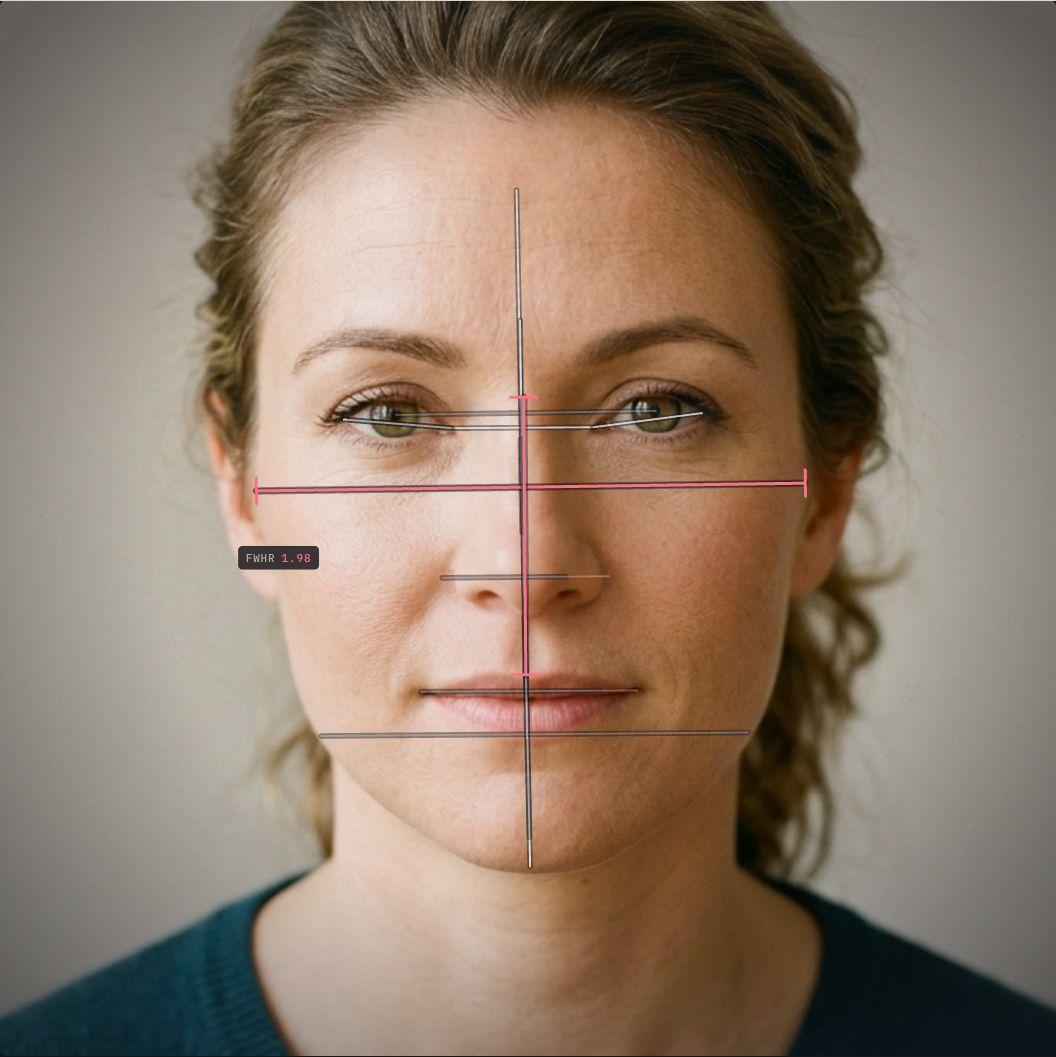
There is no single 'good' fWHR. Published studies use different vertical anchors and report small, context-dependent associations rather than a beauty standard. This calculator uses a visible-mesh upper-face measure and a 1.8–2.1 internal comparison band; compare the number only with the method shown here.
What is the average fWHR?
Published samples mostly report fWHR values between about 1.6 and 2.2, but the 'average' depends heavily on which vertical anchors a study uses - brow-to-lip methods produce different numbers than eyelid-based ones. That method-dependence is why this calculator discloses its own anchors and comparison band instead of quoting one universal average; only compare your number against the method shown here. On this calculator's eyelid-anchored method, the median across 14,144 faces in the reference site’s cohort was 2.02, with the middle half between 1.89 and 2.17; the tool also prints the brow-to-lip research-method value beside it so you can compare with the published samples, which mostly fall between about 1.6 and 2.2 on that method.
What is the ideal midface ratio?
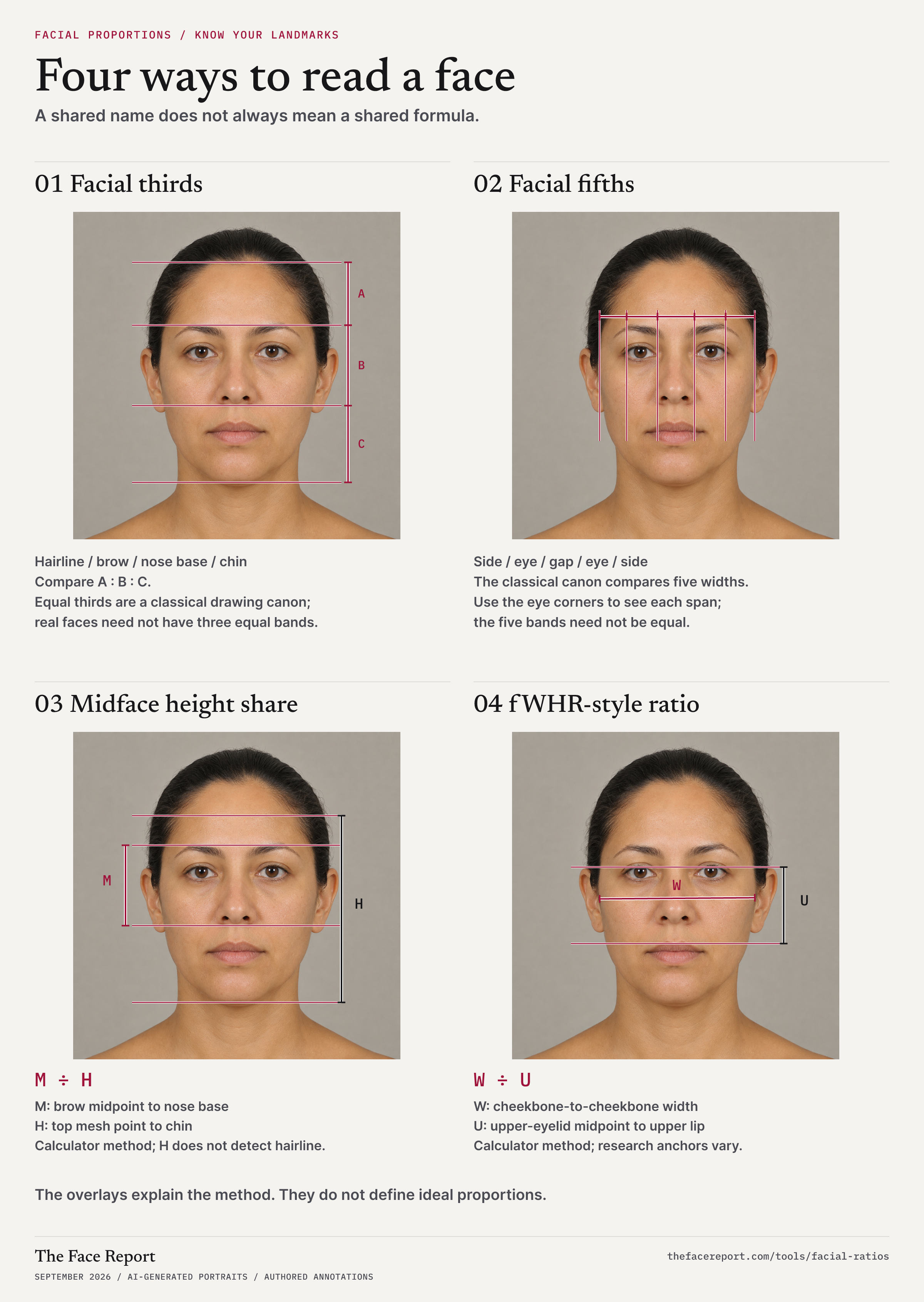
There is no universal ideal because 'midface ratio' can describe different landmark pairs. This tool divides brow-midpoint-to-nose-base distance by visible face height and uses 0.38–0.44 as its calculator reference band. The popular pupil-distance-to-midface-height convention produces a different number and should not be compared directly. As a reference point, the median on this calculator's method across 14,144 faces in the reference site’s cohort was 0.44, with the middle half between 0.42 and 0.46, so a value just above the band is common. The result shows the 0.38–0.44 reference band beside your value without assigning a population percentile.
How does this tool measure my midface ratio?
It detects a brow midpoint, nose base, visible forehead-top mesh point, and chin from one front-facing photo. It divides brow-to-nose-base distance by visible mesh height. The result is a dimensionless 2D photo estimate - not a hairline measurement, sub-millimeter scan, or clinical anthropometric exam.
Are facial ratios scientific?
The distance calculations are reproducible geometry when the same landmarks and photo conditions are used. That does not make the calculator's comparison bands universal laws of attractiveness. Research reviews find substantial variation in definitions, samples, populations, and aesthetic conclusions, so use the result as a descriptive photo comparison.
Do facial ratios change with age?
Some soft-tissue proportions can change over time, while a single-photo result can also move because of expression, lens distance, lighting, pose, or landmark detection. For before-and-after comparisons, use the same neutral expression, camera, distance, and eye-level angle. This tool cannot diagnose age-related anatomical change.
What is the difference between FWHR and the golden ratio?
They compare different distances. This tool's fWHR-style value divides cheekbone width by visible upper-face height. Golden-ratio tools compare other facial distances with phi (about 1.618). Neither number is a validated standalone measure of beauty, personality, or health.
Can I improve my facial ratios?
A photo ratio is a description, not a treatment recommendation. Camera setup, expression, hair, and styling can change how proportions look without changing anatomy. If you are considering a medical or dental intervention, discuss your goals and appropriate three-dimensional measurements with a qualified clinician rather than using this result to self-diagnose.
Is a low overall score bad?
No. The score is an equal-weight average of distance from 12 calculator reference bands. It is not validated as an attractiveness, health, ethnicity, age, or treatment score, and it cannot capture expression, three-dimensional structure, or individual character.